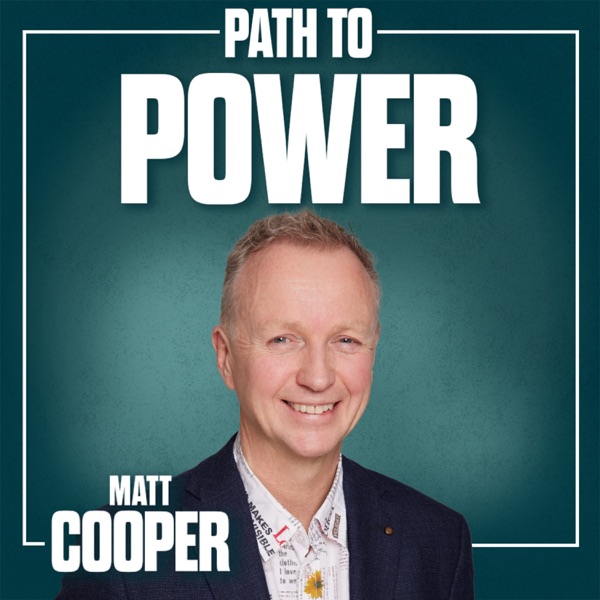
Matt Cooper|156 - Two Presidents: Zelensky and Connolly
In Path to Power, experienced broadcaster Matt Cooper and guests bring their individual points of view to a lively weekly discussion that sets the agenda and examines all the political and current issues.
The hosts examine the intersection of international diplomacy and Irish domestic policy, debating the significance of recent political summits and the complexities of maintaining military neutrality in an era of hybrid warfare. The discussion covers the necessity of defending national infrastructure against cyber threats and the use of dual-use technology for maritime surveillance.
The conversation also addresses pressing economic and social challenges, including the fiscal risks of relying on corporation tax, the impact of AI on the public sector, and critical shortages in energy grid capacity and housing. Finally, the episode reflects on the evolution of the Irish presidency, evaluating recent leadership and the historical legacies of figures like Mary Robinson.
Chapters
Click on a chapter to go directly to that moment
Highlights
Very little of this has anything to do with our daily lives.
00:02:39 · Matt expresses skepticism regarding the practical impact of high-level political meetings on ordinary people.
We're militarily neutral. We're not morally neutral.
00:10:23 · The hosts discuss the distinction between Ireland's military stance and its moral position regarding the war in Ukraine.
We have this thing called dual use. And an awful lot of technology that has been developed in Ireland by Irish companies as well as by American companies can also be used for military means.
00:15:20 · The speaker explains how civilian technological advancements can be repurposed for military applications.
We are funding this from corporation taxes from maybe three or four companies and a couple of products, iPhones and Manjaro.
00:29:23 · The discussion points out the vulnerability of the national budget due to its reliance on a very small number of multinational corporations.
The problem isn't the data centres suck in the energy. The problem is the grid isn't able to take in the energy which has been generated to distribute it to the data centres.
00:35:29 · A speaker identifies the lack of grid capacity as a primary bottleneck for utilizing renewable energy.
The hosts examine the intersection of international diplomacy and Irish domestic policy, debating the significance of recent political summits and the complexities of maintaining military neutrality in an era of hybrid warfare. The discussion covers the necessity of defending national infrastructure against cyber threats and the use of dual-use technology for maritime surveillance.
The conversation also addresses pressing economic and social challenges, including the fiscal risks of relying on corporation tax, the impact of AI on the public sector, and critical shortages in energy grid capacity and housing. Finally, the episode reflects on the evolution of the Irish presidency, evaluating recent leadership and the historical legacies of figures like Mary Robinson.
Published14 Nov 2026
Duration55:51
Episodes
156-
Two Presidents: Zelensky and Connolly
Listened
The hosts examine the intersection of international diplomacy and Irish domestic policy, debating the significance of recent political summits and the complexities of maintaining military neutrality in an era of hybrid warfare. The discussion covers the necessity of defending national infrastructure against cyber threats and the use of dual-use technology for maritime surveillance.
The conversation also addresses pressing economic and social challenges, including the fiscal risks of relying on corporation tax, the impact of AI on the public sector, and critical shortages in energy grid capacity and housing. Finally, the episode reflects on the evolution of the Irish presidency, evaluating recent leadership and the historical legacies of figures like Mary Robinson.
14 Nov 2026
155-
Tracksuits in D1 and D4
Listened
The hosts examine the growing social and security challenges in Dublin's inner city, debating proposals for private security to combat crime and dereliction in areas like Dublin 1. The discussion extends to broader political issues, including urban regeneration, public service pay deals, and the risk aversion within the civil service.
The episode also covers significant controversies surrounding RTÉ’s recruitment processes and financial sustainability, alongside updates on legal aid reforms, whistleblower reports regarding Garda equipment, and the identity crisis facing Fine Gael following long-term governance.
07 Nov 2026
154-
Paul Howard: A Nation Once Again
Listened
In this episode, host and author Paul Howard discuss his satirical novel about a secret civil service department tasked with planning for a United Ireland. The conversation explores the contemporary political climate of Irish reunification, noting how shifting demographics and a younger generation without memories of the Troubles are changing the landscape of Irish identity.
The discussion also delves into personal anecdotes from journalism in Northern Ireland during the Troubles and Howard's transition from writing the Ross O'Carroll Kelly series. The episode touches on the evolution of his writing process, the cultural impact of the Celtic Tiger era, and the complexities of using satire to address modern political and social challenges.
02 Nov 2026
153-
Fine Gael Worries if It’s Too Woke
Listened
The hosts analyze recent political shifts in Ireland, focusing on Fine Gael's attempt to distance itself from progressive labels and the declining poll numbers for both Fine Gael and Fianna Fáil due to unmet economic expectations. The discussion covers the rising influence of Jim O'Callaghan within Fianna Fáil amid legal aid disputes and critiques Simon Harris's leadership and media management.
The episode also explores Sinn Féin's immigration and Irish language policies, alongside a critique of Michael D. Higgins' views on NATO and the triple lock. The conversation concludes with predictions regarding the US midterm elections and potential investigations into the Trump family.
31 Oct 2026
152-
Tech Threats and the Triple Lock
Listened
The hosts examine the urgent challenges facing Ireland, from the lagging political response to climate change and severe storms to the growing environmental and energy security concerns surrounding massive data center consumption. The discussion weighs the economic necessity of the tech industry against the strain on electricity and water resources.
The episode also covers recent cybersecurity risks involving a PHP vulnerability and the debate over Ireland's 'triple lock' mechanism for peacekeeping. Finally, the conversation explores European political polarization and delves into Vincent Brown's book regarding Charlie Haughey’s complex political legacy and personal scandals.
24 Oct 2026
151-
Pay Disputes and Dirty Big Data Centres
Listened
The podcast explores the complexities of Ireland's current socio-economic landscape, beginning with an analysis of the public sector pay dispute and the economic necessity of wage increases due to inflation. The conversation transitions into the technological and infrastructural challenges posed by AI, discussing the EU's regulatory needs, energy demands for data centers, and the evolving impact of automation on the job market.
The discussion further examines the funding crisis in Irish higher education, highlighting the mismatch between high tertiary education rates and low GDP investment. Finally, the episode addresses political tensions in Northern Ireland following recent sectarian unrest, the implications for Irish unification, and the upcoming assembly elections alongside debates surrounding immigration policy.
17 Oct 2026
150-
O’Donovan vs Bakhurst: The Latest RTÉ Fight
Listened
This episode examines the political and financial controversies surrounding RTÉ, focusing on Minister Patrick O'Donovan's decision to cut expected funding and the ongoing debate regarding structural reforms and market competition. The discussion also explores the implications of recent whistleblower treatment and potential strikes within the broadcaster.
The panel further analyzes the recent Irish budget, debating whether increased spending is necessary for infrastructure or an excessive way to manage a growing population. The conversation covers topics ranging from health budget overruns and tax base concerns like the USC to political strategies regarding carbon taxes, immigration, and childcare funding negotiations.
10 Oct 2026
149-
From Lansdowne Road to the Garvaghy Road
Listened
This episode explores the intersection of sports, politics, and technology. The discussion begins with the tensions surrounding the Irish football team's matches against Israel, covering the debate over sporting boycotts, financial implications for the FAI, and concerns regarding anti-Semitism in Ireland.
The conversation then shifts to Northern Irish politics, examining the historical trauma and parade disputes in the Garvey Road area. Finally, the speakers address the global challenges of AI regulation, Europe's position in the technological race, and the evolving necessity of redefining Irish neutrality in an era of modern cyber threats.
03 Oct 2026
148-
Young, Irish and Ready to Leave
Listened
The hosts explore the rising disillusionment among young adults in Ireland, noting that 70% are considering emigration due to housing unaffordability and job uncertainty. The discussion compares current economic challenges with the high unemployment of the 1980s and examines how tightening global visa restrictions are complicating move-abroad plans.
The episode also analyzes Irish political shifts, debating fragmentation within the left-wing parties and the personal branding strategies surrounding the upcoming budget. Further topics include concerns over data privacy and facial recognition technology, the rising costs of public transport, and the complex intersection of sports, politics, and international humanitarian crises.
26 Sep 2026
147-
An Orange Republican
Listened
The hosts analyze Donald Trump's recent visit to Ireland, examining his comments on Irish reunification and the broader political implications for Irish leadership. The discussion covers the economic pressures of rising fuel prices in Ireland and the strategic debates surrounding Sinn Féin's approach to the Union.
The episode also reflects on a period of intense political instability during Brian Cowen's Taoiseachship, marked by economic fear and leadership challenges. Finally, the conversation touches upon modern social tensions, including the rise of abuse against politicians, sporting boycotts in international football, and the infrastructure costs of the Metrolink project.
19 Sep 2026
146-
Budget Dilemmas Shaped by Trump’s Iran War
Listened
The podcast explores the economic and political landscape in Ireland, beginning with the implications of the upcoming October budget and how rising cost-of-living pressures may offset potential tax benefits. The discussion covers debates surrounding carbon taxes, fuel prices, and the shifting political dynamics between figures like Simon Harris and Jack Chambers.
The conversation also delves into social and sporting issues, including the complexities of integration and gender equality within the GAA, as well as the media's influence on policy. Finally, the episode examines the logistical and security implications of Donald Trump's upcoming visit to Ireland, alongside reflections on historical presidential visits.
12 Sep 2026
145-
Carbon, Commuting, and Corruption
Listened
The podcast explores the complex intersection of economic policy and social stability in Ireland, beginning with a debate on the effectiveness of carbon taxes amidst the cost-of-living crisis. The discussion covers various domestic issues, including public transport fare increases, public sector pay disputes, and the challenges of productivity within the Irish healthcare system.
The conversation also examines broader economic shifts, such as the potential for new government investment funds to address savings gaps and housing supply, alongside the diplomatic implications of Donald Trump's visit to Ireland. Finally, the episode delves into international political investigations involving Nigel Farage's party and the influence of foreign interests on populist movements.
05 Sep 2026
144-
Bananas and Nuts
Listened
This episode examines the shifting political landscape in the UK and Ireland, beginning with British Prime Minister Andy Burnham's decision to deprioritize a United Ireland referendum in favor of economic stability. The discussion analyzes how this shift impacts Sinn Féin's strategy and weighs the emotional arguments for reunification against practical concerns like housing, cost of living, and the risk of renewed violence.
The conversation also covers the Irish government's recent fiscal decisions, specifically the deferral of fuel excise duty increases to maintain political stability. The speakers conclude by critiquing the perceived loss of governmental authority due to concessions made to protesters and examining a Central Bank report that reveals extreme wealth inequality within Ireland.
29 Aug 2026
143-
Our Crime and Punishment Crisis
Listened
The podcast explores the escalating tensions within the Irish justice and political systems, beginning with a discussion on the policing response to a tragic motorway incident and the legal risks facing Gardaí during high-speed pursuits. The conversation shifts to systemic failures in the justice system, including prison overcrowding, the perceived leniency toward repeat offenders, and bureaucratic hurdles preventing essential law enforcement resources from being deployed.
The episode also delves into Irish political dynamics, analyzing the impact of the Healy-Ray family's local influence in Kerry and the broader implications of recent documentaries on political alliances. Finally, the hosts address pressing national issues, including potential fuel protests driven by economic pressures and the critical lack of integrated infrastructure and transport links in new large-scale housing developments.
22 Aug 2026
142-
Rating the Cabinet
Listened
The hosts conduct a comprehensive evaluation of Irish government ministers, analyzing the leadership potential and political performance of figures across Fianna Fáil and Fine Gael. The discussion delves into Jim O'Callaghan's handling of key issues like fuel protests and immigration, while comparing his trajectory to other potential leaders such as Simon Harris.
The episode further examines the competence and challenges faced by various departmental heads, including assessments of ministers in housing, health, education, and agriculture. The conversation explores internal party dynamics, the impact of political communication strategies, and the future leadership prospects within both major parties.
15 Aug 2026
141-
Wanting a United Ireland
Listened
In this episode of Path to Power, the host discusses the potential inevitability of a united Ireland with former Taoiseach Leo Varadkar and Senator Conor Murphy. The guests explore shifting demographics, the impact of Brexit, and the changing political identities in Northern Ireland, while debating the merits of using structured approaches like citizens' assemblies to facilitate an informed transition toward constitutional change.
The discussion further explores the complexities of Irish reunification, addressing economic alignment between North and South, the political priorities of Sinn Féin voters, and the necessity of making unification a cross-party national project. The speakers also address critical challenges, including protecting the rights of the British minority and managing potential violence from hardline groups during any transition.
08 Aug 2026
140-
The Streisand Effect
Listened
The hosts examine the economic and political controversies surrounding major sporting events in Ireland, specifically focusing on the Freedom of Information dispute regarding the Ryder Cup's cost-benefit analysis. They debate whether state subsidies for large-scale spectacles deliver true financial benefits or if resources would be better spent on grassroots community sports like the GAA.
The discussion also covers security implications of high-profile visits, the 'Stop the Game' campaign regarding football matches involving Israel, and a critique of government transparency. The episode concludes with reflections on political inertia regarding climate change targets and the tendency to avoid difficult truths in public reporting.
01 Aug 2026
139-
Overselling Simon
Listened
The hosts analyze the upcoming Irish budget, examining the tension between increased government spending and limited tax relief strategies. The discussion explores Simon Harris's political maneuvering to gain credit through tax breaks, while also addressing the economic risks posed by AI to multinational corporations in Ireland.
The episode further covers the legal implications of reforms to the free legal aid system and the debate over new e-scooter regulations regarding safety and enforcement. Finally, the conversation shifts to the intersection of local Irish politics and international sanctions related to Russia.
25 Jul 2026
138-
Mary Lou and Micheál's Enmity
Listened
Lise Hand and John Lee join Matt to discuss Mary Lou McDonald and Micheál Martin's true feelings for each other after the Sinn Féin leader calls her Fianna Fáil counterpart and Taoiseach a 'tosser'. Lynn Boylan's European Parliament embarrassment on the Irish language. Sinn Féin's position on an engineering plant in Derry that might be supplying the Israeli Air Force. The politics of Intel's increased Irish investment. Why the government must be glad it no longer has to deal with Aer Lingus' decisions. The length of the Dáil summer break, and John teases his cabinet scorecards. Brought to you by The Greenman Group. PTP+ To enjoy early access, ad-free listening and weekly bonus episodes, sign up at pathtopowerpodcast.com Get in touch: mail@pathtopowerpodcast.com Follow Matt: https://twitter.com/cooper_m https://www.linkedin.com/in/matt-cooper-615a1317 https://www.instagram.com/mattcooperlastword/ Hosted on Acast. See acast.com/privacy for more information.
18 Jul 2026
137-
From Count Binface to Conor McGregor
Listened
Former Taoiseach Leo Varadkar and Áine Kerr join Matt to address the challenge to Nigel Farage being posed by a comedy candidate in the Clacton by-election. They give suggestions on how to revitalise O'Connell Street and the GPO. They offer a cost-benefit analysis on the MetroLink and wonder why it has taken so long. All three are outraged by the decision of the US Ambassador to Ireland to visit Conor McGregor's pub. Brought to you by The Greenman Group. PTP+ To enjoy early access, ad-free listening and weekly bonus episodes, sign up at pathtopowerpodcast.com Get in touch: mail@pathtopowerpodcast.com Follow Matt: https://twitter.com/cooper_m https://www.linkedin.com/in/matt-cooper-615a1317 https://www.instagram.com/mattcooperlastword/ Hosted on Acast. See acast.com/privacy for more information.
11 Jul 2026
136-
Sex, Alcohol, and Irish Politics
Listened
Matt is joined by Danny McConnell and John Lee, who distinguish between Jeffrey Donaldson's illegal acts and his inappropriate ones, but ask how often inappropriate acts by Irish politicians get overlooked by the media. They examine some of the most high-profile events of the 21st century that did get media attention and why others didn't. Micheál Martin's erosion of authority, security issues with Trump's likely September visit, the strange results of the Red C poll on immigration, and the discrepancies on the Mayor of Galway's website. Brought to you by The Greenman Group. PTP+ To enjoy early access, ad-free listening and weekly bonus episodes, sign up at pathtopowerpodcast.com Get in touch: mail@pathtopowerpodcast.com Follow Matt: https://twitter.com/cooper_m https://www.linkedin.com/in/matt-cooper-615a1317 https://www.instagram.com/mattcooperlastword/ Hosted on Acast. See acast.com/privacy for more information.
04 Jul 2026
135-
Donaldson's Depravity and His Toxic Politics
Listened
Former Taoiseach Leo Varadkar and Áine Kerr join Matt to discuss Jeffrey Donaldson's appalling crimes and what he put his victims through by denying his guilt. They look at his political career and how he was a malign influence for more than forty years. They discuss Nigel Farage and whether his acceptance of a £5 million gift has scuttled his chance of becoming a prime minister. They discuss the departure of Keir Starmer, assess the likelihood of Andy Burnham doing a good job, and the timing of the general election he will call. They debate whether the decriminalisation of the possession of drugs would be a good idea or not, and weigh in on the importance or not of Ireland hosting the EU Presidency. Brought to you by The Greenman Group. PTP+ To enjoy early access, ad-free listening and weekly bonus episodes, sign up at pathtopowerpodcast.com Get in touch: mail@pathtopowerpodcast.com Follow Matt: https://twitter.com/cooper_m https://www.linkedin.com/in/matt-cooper-615a1317…
27 Jun 2026
134-
Remembering Veronica Guerin
Listened
Lise Hand joins Matt to remember their great friend who was murdered 30 years ago in June 1996. They recall their friendships with Veronica, how they got to know her, and her early years in journalism. They swap stories about what a great character she was, but also how she was a trailblazing journalist. They turn to the circumstances of the horror of her death and assess the reaction of the politicians of the time and what they did in response to what was a national outrage. They address her legacy and wonder what Veronica would be doing now if she were still with us. Brought to you by The Greenman Group. PTP+ To enjoy early access, ad-free listening and weekly bonus episodes, sign up at pathtopowerpodcast.com Get in touch: mail@pathtopowerpodcast.com Follow Matt: https://twitter.com/cooper_m https://www.linkedin.com/in/matt-cooper-615a1317 https://www.instagram.com/mattcooperlastword/ Hosted on Acast. See acast.com/privacy for more information.
20 Jun 2026
133-
The Racists Among Us
Listened
Lise Hand and Shane Coleman join Matt to discuss the race riots in Belfast and how racism is also a major issue throughout the island, how fire bombings have not been restricted to Belfast, and how a blind eye is turned to the island's native criminals. The political posturing over the EU Migration Pact and its implementation. The politics of the Ireland-Israel soccer international. Further developments on the Triple Lock for peacekeeping. And how Jennifer Carroll MacNeill faced down the Rotunda Hospital. Brought to you by The Greenman Group. PTP+ To enjoy early access, ad-free listening and weekly bonus episodes, sign up at pathtopowerpodcast.com Get in touch: mail@pathtopowerpodcast.com Follow Matt: https://twitter.com/cooper_m https://www.linkedin.com/in/matt-cooper-615a1317 https://www.instagram.com/mattcooperlastword/ Hosted on Acast. See acast.com/privacy for more information.
13 Jun 2026
132-
From Here to Maternity
Listened
Brenda Power and John Deasy join Matt to discuss the controversy about hospital consultants employed by the State doing private work in public hospitals. Two bulls in a Kerry Field: division between the Healy-Raes, what's really going on? The new EU scrappage scheme: more than a PR stunt? The politics of the declining birth rate. Bungalow blitz or bliss? John and Brenda have very different views. Supplying the Russian war machine from Shannon. And the latest on Ireland-Israel relations. Brought to you by The Greenman Group. PTP+ To enjoy early access, ad-free listening and weekly bonus episodes, sign up at pathtopowerpodcast.com Get in touch: mail@pathtopowerpodcast.com Follow Matt: https://twitter.com/cooper_m https://www.linkedin.com/in/matt-cooper-615a1317 https://www.instagram.com/mattcooperlastword/ Hosted on Acast. See acast.com/privacy for more information.
06 Jun 2026
131-
Climate Targets and Immigration Politics
Listened
Danny McConnell and John Lee join Matt to discuss the concession that our 2030 climate targets will be missed, and ask if we need to apply the Tony Blair analysis for Britain that net zero is inappropriate. They offer their by-election analysis of the real significance of the outcomes of two by-elections for the national picture. They discuss the changing conversation on immigration and Jim O’Callaghan’s position on deporting criminals. They return to the thorny problem of financing RTÉ, and debate whether the Government is as much to blame as management for the current crisis. Brought to you by The Greenman Group. PTP+ To enjoy early access, ad-free listening and weekly bonus episodes, sign up at pathtopowerpodcast.com Get in touch: mail@pathtopowerpodcast.com Follow Matt: https://twitter.com/cooper_m https://www.linkedin.com/in/matt-cooper-615a1317 https://www.instagram.com/mattcooperlastword/ Hosted on Acast. See acast.com/privacy for more information.
30 May 2026
130-
Ireland's Racism Issues
Listened
The death of Yves Sakila on a Dublin street - is this the Irish version of George Floyd, but do enough people care? Brendan Ogle joins Matt, and they have a wider conversation on the impact of migration on Ireland, Brendan's personal experiences of listening to racist comment, and they discuss work visas for non-EU citizens. What are the real issues in the latest RTÉ hoo-ha? Reaction to Israel's illegal kidnapping of flotilla members and why a football international with Israel cannot take place in Dublin. As a former train driver, Brendan reacts to Irish Rail's failed €50 million IT investment, and Matt asks if the DAA should be allowed to spend €5 billion on extending Dublin Airport. Brought to you by The Greenman Group. PTP+ To enjoy early access, ad-free listening and weekly bonus episodes, sign up at pathtopowerpodcast.com Get in touch: mail@pathtopowerpodcast.com Follow Matt: https://twitter.com/cooper_m https://www.linkedin.com/in/matt-cooper-615a1317 https://www.instagram.com/mattcooperlastword/…
23 May 2026
129-
Analogue Bertie Hobbled by a Digital World
Listened
Matt is joined by Lise Hand and Shane Coleman to discuss the controversy involving former Taoiseach Bertie Ahern and his views on immigration, as expressed to a voter who recorded and disclosed them. They offer a detailed assessment of the way in which Bertie Ahern operates and why he is an analogue 20th century politician in a digital world. Discussions on; the appropriate use of our national flag - the tricolour, how immigration will be a factor in next week's by-elections and whether constituency polls are accurate predictors of what will happen. They also discuss Jack Chambers attempts to impose fiscal discipline on his ministerial colleagues, Simon Harris’ obsession with savings plans for the well-off and Revenue’s approach to taxing sheds for beds. Brought to you by The Greenman Group. PTP+ To enjoy early access, ad-free listening and weekly bonus episodes, sign up at pathtopowerpodcast.com Get in touch: mail@pathtopowerpodcast.com Follow Matt: https://twitter.com/cooper_m…
16 May 2026
128-
Ireland’s Antisemitism Debate
Listened
John Deasy and Brenda Power join Matt for a spirited exchange about Patrick Kielty’s Late Late Show comments and how they have sparked wider allegations that Ireland is antisemitic. Before that, they discuss why Ireland won’t ever go nuclear and why the country’s abortion laws are likely to remain unchanged. The impact of Gerry Hutch in the Dublin Central by-election and how Sinn Féin addresses his immigrant and race-baiting. How is the unity of the Left in the by-elections? Our pullback on Ukrainian support, character references from TDs for the convicted, and are student fee reductions the next Fianna Fáil/ Fine Gael split? Get in touch: mail@pathtopowerpodcast.com Follow Matt: https://twitter.com/cooper_m https://www.linkedin.com/in/matt-cooper-615a1317 https://www.instagram.com/mattcooperlastword/ Brought to you by The Greenman Group. PTP+ To enjoy early access, ad-free listening and weekly bonus episodes, sign up at pathtopowerpodcast.com Get in touch: mail@pathtopowerpodcast.com Follow Matt:…
09 May 2026
127-
Why Not a Mini Budget?
Listened
Matt is joined by Danny McConnell and John Lee to discuss the changing government generosity towards Ukrainians and how this may have been influenced by the by-election in Galway West and Dublin Central. On the latter, they explore why a Sinn Féin win in Mary Lou's home constituency is not the slam dunk it should be, due to the presence of Gerry Hutch and possible voter confusion about what Sinn Féin stands for. They discuss the potential for Dara Calleary to become the leader of Fianna Fáil. Matt condemns the failure to get electric buses on the road and expresses bafflement at dust in the ducts at the National Children's Hospital, and they finish with praise for the financial generosity of former President Michael D. Higgins. PTP+ To enjoy early access, ad-free listening and weekly bonus episodes, sign up at pathtopowerpodcast.com Get in touch: mail@pathtopowerpodcast.com Follow Matt: https://twitter.com/cooper_m https://www.linkedin.com/in/matt-cooper-615a1317 https://www.instagram.com/mattcooperlastword/…
02 May 2026
126-
How Protest Should Be Done - The Expert’s View
Listened
Long-time protest activist Brendan Ogle takes issue with the conduct of the diesel protests and the government’s capitulation to unlicensed protesters. He details his own experiences with the Locomotive Drivers' Association, the Right2Water campaign, and the Apollo House protest against homelessness. PTP+ To enjoy early access, ad-free listening and weekly bonus episodes, sign up at pathtopowerpodcast.com Get in touch: mail@pathtopowerpodcast.com Follow Matt: https://twitter.com/cooper_m https://www.linkedin.com/in/matt-cooper-615a1317 https://www.instagram.com/mattcooperlastword/ Hosted on Acast. See acast.com/privacy for more information.
25 Apr 2026
125-
Leo's Rural-Urban Divide
Listened
Shane Coleman and Lise Hand join Matt, and they start with the suggested split in the Healy-Rae dynasty. They discuss all the issues related to the rural-urban divide, with particular emphasis on deprivation in urban areas. What would the public reaction be if people living in the inner cities did what the farmers did? Could the protesters bring us towards having an Irish Trump? Is the government, awash with cash, going to be a soft touch to further protests? A debate on the merits of bringing back social partnership, are we on the road to anarchy, and have we forgotten the crash? They discuss the controversy caused by Leo Varadkar’s comments about the rural-urban divide and who really pays the bills. The highly paid Robert Watt, cause he’s worth it? And how clever has Catherine Connolly’s immigration legislation position been? Brought to you by The Greenman Group. PTP+ To enjoy early access, ad-free listening and weekly bonus episodes, sign up at pathtopowerpodcast.com Get in touch:…
25 Apr 2026
124-
PTP America: J. Edgar Boozer, Pulp Fiction, and a Raccoon's Penis
Listened
As Trump continues his suspension of the assault on Iran, Matt and Marion divert to the case of Kash Patel's sobriety, Pete Hegseth's use of a Pulp Fiction script as scripture, and RFK Jr.'s interest in the penises of raccoons. They discuss the sincerity of Tucker Carlson recanting his support for Trump, and how Marjorie Taylor Greene brings it all back to the Epstein files. Why MAGA is losing faith in the story it believed about the Trump assassination attempt. Trump's Fed nominee, Kevin Warsh and accusations that he's a 'sock puppet'. The many problems besetting the FIFA World Cup. And Joe Rogan persuades Trump to be interested in psychedelic drugs. PTP+ To enjoy early access, ad-free listening and weekly bonus episodes, sign up at pathtopowerpodcast.com Get in touch: mail@pathtopowerpodcast.com Follow Matt: https://twitter.com/cooper_m https://www.linkedin.com/in/matt-cooper-615a1317 https://www.instagram.com/mattcooperlastword/ Hosted on Acast. See acast.com/privacy for more information.
24 Apr 2026
123-
Powder keg Politics and Protests
Listened
Former Taoiseach Leo Varadkar and former political correspondent Áine Kerr join Matt to analyse the politics of the past fortnight, dominated by the diesel protests. They look at Jim O’Callaghan’s use of the army, Patrick O’Donovan’s aborted assault on the media, and what the protests tell us about the rural-urban divide. The resignation of Junior Minister Michael Healy-Rae. How the opposition parties behaved during the protests. The Fianna Fáil youthful backbencher revolt. Dáil member behaviour towards and overall decorum. And Trump and the Pope. Brought to you by The Greenman Group. PTP+ To enjoy early access, ad-free listening and weekly bonus episodes, sign up at pathtopowerpodcast.com Get in touch: mail@pathtopowerpodcast.com Follow Matt: https://twitter.com/cooper_m https://www.linkedin.com/in/matt-cooper-615a1317 https://www.instagram.com/mattcooperlastword/ Hosted on Acast. See acast.com/privacy for more information.
18 Apr 2026
122-
Fuelling the (Ire)land
Listened
Driving the protesters off the blocked roads: Brenda Power and John Deasy join Matt to discuss how the government has to confront threatened anarchy. Carbon tax increases debated, and is the future Nuclear? Why objections to IPAS Centres won't be bypassed. Why the Department of Education can't get its budget sums right, the problem with voluntary contributions, and paying teachers appropriately. Also, Mary Lou McDonald's belief that a united Ireland is the pressing political issue, will she campaign on that basis in the by-elections? Brought to you by The Greenman Group. PTP+ To enjoy early access, ad-free listening and weekly bonus episodes, sign up at pathtopowerpodcast.com Get in touch: mail@pathtopowerpodcast.com Follow Matt: https://twitter.com/cooper_m https://www.linkedin.com/in/matt-cooper-615a1317 https://www.instagram.com/mattcooperlastword/ Hosted on Acast. See acast.com/privacy for more information.
11 Apr 2026
121-
Everything Goes Off the Rails
Listened
Lise Hand and John Lee join Matt to discuss if the MetroLink project may be derailed by the untimely departure of its boss, Seán Sweeney, and if the government finances become shredded, will MetroLink become a victim again? How the attack on Iran continues to affect the Irish economy and the impact on the government's decision-making. Super saver Simon Harris: What does he want you to do with your money (if you have any)? Is Trump responsible for the increased sales of EV cars? Where would Ireland put a nuclear power plant? And tributes to the late Dr Rory O'Hanlon. Brought to you by The Greenman Group. PTP+ To enjoy early access, ad-free listening and weekly bonus episodes, sign up at pathtopowerpodcast.com Get in touch: mail@pathtopowerpodcast.com Follow Matt: https://twitter.com/cooper_m https://www.linkedin.com/in/matt-cooper-615a1317 https://www.instagram.com/mattcooperlastword/ Hosted on Acast. See acast.com/privacy for more information.
04 Apr 2026
120-
How Many TDs to Change a Lightbulb?
Listened
Danny McConnell and John Lee join Matt and open with a discussion on the proposal to limit the number of TDs. They discuss the 18th delay to the handing over of a National Children's Hospital by BAM. Do we need more Robert Watts running our Civil Service? The politics of excise cuts and fiscal discipline. How can overruns at the Department of Education happen annually? Have they learnt nothing? The impact of Jim O'Callaghan in Justice and who is responsible for increased Garda visibility. Brought to you by The Greenman Group. PTP+ To enjoy early access, ad-free listening and weekly bonus episodes, sign up at pathtopowerpodcast.com Get in touch: mail@pathtopowerpodcast.com Follow Matt: https://twitter.com/cooper_m https://www.linkedin.com/in/matt-cooper-615a1317 https://www.instagram.com/mattcooperlastword/ Hosted on Acast. See acast.com/privacy for more information.
28 Mar 2026
119-
The Price Donald Trump Makes Us Pay
Listened
Matt is joined by Brendan Ogle and Larry Donnelly to look at Irish reactions to Trump's Iranian assault. They rate and review Micheál Martin's Oval Office visit as much for what it signified as what he said. They discuss whether it is safe for Irish people to go to America, especially for the World Cup. Brendan, a regular visitor to Cuba, explains why we should continue to monitor the situation there while all the tension and focus are on the Middle East. They return home to discuss the many price increases that are likely to result from the Gulf crisis and what the government could and should do in response. They debate the number of data centres and the price they should pay for electricity. And they finish on the Oireachtas hearing on the extension of passenger numbers at Dublin Airport. Brought to you by The Greenman Group. PTP+ To enjoy early access, ad-free listening and weekly bonus episodes, sign up at pathtopowerpodcast.com Get in touch: mail@pathtopowerpodcast.com Follow Matt:…
21 Mar 2026
118-
Micheál Martin's Mission: Impossible
Listened
Lise Hand and Shane Coleman join Matt to assess the perilous nature of Micheál Martin's visit to the Oval Office: what sort of Trump will he find, can he safeguard Irish interests, and is it right to be dealing with the increasingly erratic president at all at a time of war? Was Catherine Connolly out of line to make statements about violations of international law, and in doing so, was she putting it up to the government? Lise and Shane disagree vehemently. Matt defends the Moriarty Tribunal from the criticisms of Michael Lowry and Denis O'Brien. And also, a short clip from Leo Varadkar - our new PTP cast member. Brought to you by The Greenman Group. PTP+ To enjoy early access, ad-free listening and weekly bonus episodes, sign up at pathtopowerpodcast.com Get in touch: mail@pathtopowerpodcast.com Follow Matt: https://twitter.com/cooper_m https://www.linkedin.com/in/matt-cooper-615a1317 https://www.instagram.com/mattcooperlastword/ Hosted on Acast. See acast.com/privacy for more information.
14 Mar 2026
117-
How the Iranian War Impacts Ireland
Listened
Brenda Power and John Deasy join Matt to discuss America's assault on Iran and what Ireland's position on it should be. They assess what Micheál Martin should do in Washington the week after next, and how a prolonged war would prompt a cost-of-living crisis. They debate whether the government should be paying for people to return from the Gulf states. They also discuss the Fáilte Ireland attempt to get us all to take more short holiday breaks in Ireland. And they focus on Phil Hogan's bid for a new big UN gig. Brought to you by The Greenman Group. PTP+ To enjoy early access, ad-free listening and weekly bonus episodes, sign up at pathtopowerpodcast.com Get in touch: mail@pathtopowerpodcast.com Follow Matt: https://twitter.com/cooper_m https://www.linkedin.com/in/matt-cooper-615a1317 https://www.instagram.com/mattcooperlastword/ Hosted on Acast. See acast.com/privacy for more information.
07 Mar 2026
116-
Sinn Féin Under the Microscope
Listened
Matt is joined by John Lee and Danny McConnell to discuss Sinn Féin's prospects in the Dublin Central by-election, its position on Ukraine, Mary Lou McDonald's memories of Brendan 'Bik' McFarlane, and how cost-of-living issues may give SF its strongest opportunity to make a mark on the government politically. Also, rent reforms and house building, Ireland's defence readiness for the EU presidency, and reaction to the Greens victory in the British by-election. Brought to you by The Greenman Group. PTP+ To enjoy early access, ad-free listening and weekly bonus episodes, sign up at pathtopowerpodcast.com Get in touch: mail@pathtopowerpodcast.com Follow Matt: https://twitter.com/cooper_m https://www.linkedin.com/in/matt-cooper-615a1317 https://www.instagram.com/mattcooperlastword/ Hosted on Acast. See acast.com/privacy for more information.
28 Feb 2026
115-
Children and Babies and Providing for Them
Listened
Matt is joined by Áine Kerr and Shane Coleman to discuss the importance of SNAs in our schools and our government's mishandling of potential changes. Why is the government finding it so hard to come up with ways of protecting our children from harmful social media? Outrage at the planning refusal for a new building for the Rotunda Hospital on Parnell Square, is there anything to be said in favour of the planning board's decision? Was Sinn Féin invited to the White House or not before it said it wasn't going? Brought to you by The Greenman Group. PTP+ To enjoy early access, ad-free listening and weekly bonus episodes, sign up at pathtopowerpodcast.com Get in touch: mail@pathtopowerpodcast.com Follow Matt: https://twitter.com/cooper_m https://www.linkedin.com/in/matt-cooper-615a1317 https://www.instagram.com/mattcooperlastword/ Hosted on Acast. See acast.com/privacy for more information.
21 Feb 2026
114-
Banged Up Abroad
Listened
Former Fine Gael TD John Deasy and Irish Daily Mail Columnist Brenda Power join Matt to discuss the wider implications for Irish emigrants to the US of the Seamus Culleton case. Why is Ireland soft on the murderous Iranian Regime? Sinn Féin's positions on Iran and Ukraine assessed. The rise of the Social Democrats: Is it sustainable and at whose expense? Michael Healy Rae and his Airbnb victory. Is the IFA biting off more than it can chew with its Bord Bia campaign? The latest Garda Scandal: Is there adequate justice for Margaret Loftus? Kier Starmer's survival. And where Ireland will play football against Israel. Brought to you by The Greenman Group. PTP+ To enjoy early access, ad-free listening and weekly bonus episodes, sign up at pathtopowerpodcast.com Get in touch: mail@pathtopowerpodcast.com Follow Matt: https://twitter.com/cooper_m https://www.linkedin.com/in/matt-cooper-615a1317 https://www.instagram.com/mattcooperlastword/ Hosted on Acast. See acast.com/privacy for more information.
14 Feb 2026
113-
The Rain Blame Game
Listened
Danny McConnell and John Lee examine the consequences of Ireland’s repeated failure to deliver flood defences and critical infrastructure. They ask whether the Social Democrats under Holly Cairns are emerging as a credible alternative to Sinn Féin on the left, assess the runners and riders in the upcoming Dublin by-election, the continued fallout from the government’s ‘incoherent’ stance on Mercosur, and the performance of social media executives at the Oireachtas. Brought to you by The Greenman Group. PTP+ To enjoy early access, ad-free listening and weekly bonus episodes, sign up at pathtopowerpodcast.com Get in touch: mail@pathtopowerpodcast.com Follow Matt: https://twitter.com/cooper_m https://www.linkedin.com/in/matt-cooper-615a1317 https://www.instagram.com/mattcooperlastword/ Hosted on Acast. See acast.com/privacy for more information.
07 Feb 2026
112-
Get the Fliuch Out of Here
Listened
As Storm Chandra wreaked havoc on the country, Shane Coleman and Lise Hand discuss who is really responsible for making sure appropriate weather warnings are given. Fianna Fáil's slump in the polls and the threat to Micheál Martin's leadership. Ivana Bacik's calls for the Taoiseach not to visit the White House on St. Patrick's Day. The soapbox politics of the Bord Bia and Brazilian beef situation. A salute to Mary Robinson and other leading Irish women for St. Brigid's Day. And the resurgence of protest songs in response to troubling world events. Brought to you by The Greenman Group. PTP+ To enjoy early access, ad-free listening and weekly bonus episodes, sign up at pathtopowerpodcast.com Get in touch: mail@pathtopowerpodcast.com Follow Matt: https://twitter.com/cooper_m https://www.linkedin.com/in/matt-cooper-615a1317 https://www.instagram.com/mattcooperlastword/ Hosted on Acast. See acast.com/privacy for more information.
31 Jan 2026
111-
A Bowl of Shamrock and a Billion Dollars for Trump
Listened
As Donald Trump pushes his Board of Peace idea, would it be wise for Ireland to join and if we say no, could the squeeze be put on us? John Deasy and Brenda Power join Matt, and John outlines his personal dealings with the US President during his time as an Irish government envoy. Is Ireland ready for a 'MIGA' movement, and why would the US Ambassador to Ireland go to a fringe conference? Is the Mercosur European Parliament vote something that Trump would have wanted? The Board of Peace: Is it a Trump commercial venture for Gaza? Also, Gráinne Seoige's experience of fake photos on the internet, can her terrible experience lead to real action, or are we too scared of losing the Meta tax revenues? And finally, why is the M4 bus corridor not open? Brought to you by The Greenman Group. PTP+ To enjoy early access, ad-free listening and weekly bonus episodes, sign up at pathtopowerpodcast.com Get in touch: mail@pathtopowerpodcast.com Follow Matt: https://twitter.com/cooper_m…
24 Jan 2026
110-
Naughty Micheál, Nudie Grok, & Paschal's Silence
Listened
Matt is joined by Danny McConnell and John Lee to unpack the continuing Mercosur fallout inside the government and with the EU. The foreign challenges for Micheál Martin in 2026. All talk but what action about Grok AI? The politics and economics of the data centres. Paschal Donohoe, the World Bank, and the question of an additional €10 million. The merits of politicians reading books. Jim O'Callaghan's immigration crackdown. And the protection of sources by journalists from the courts. Brought to you by The Greenman Group. PTP+ To enjoy early access, ad-free listening and weekly bonus episodes, sign up at pathtopowerpodcast.com Get in touch: mail@pathtopowerpodcast.com Follow Matt: https://twitter.com/cooper_m https://www.linkedin.com/in/matt-cooper-615a1317 https://www.instagram.com/mattcooperlastword/ Hosted on Acast. See acast.com/privacy for more information.
17 Jan 2026
109-
The Guns of January
Listened
Brenda Power and Larry Donnelly join Matt for a wide-ranging discussion starting with the Irish government's position on the Mercosur deal. What Micheál Martin was up to in China, and how the Chinese relationship will impact our existing relationships with the US and the EU. Why we need to worry about more people than Trump. What is our government going to do about Elon Musk's Grok and the 'nudification' of photos? Jim O'Callaghan's sneaky and dangerous attack on journalism. Political action on road safety. And finally, Mary Lou McDonald's interview about the place of trans people in Ireland, debated. Brought to you by Greenman OPEN PTP+ To enjoy early access, ad-free listening and weekly bonus episodes, sign up at pathtopowerpodcast.com Get in touch: mail@pathtopowerpodcast.com Follow Matt: https://twitter.com/cooper_m https://www.linkedin.com/in/matt-cooper-615a1317 https://www.instagram.com/mattcooperlastword/ Hosted on Acast. See acast.com/privacy for more information.
10 Jan 2026
108-
Simon Harris & His Many Opinions
Listened
Lise Hand and Shane Coleman join Matt to assess the many newspaper interviews given by Tánaiste and Fine Gael leader Simon Harris over the Christmas period. They discuss the threats to his family's safety, his likely tax and spend position as finance minister, the controversies caused by his comments on homelessness and migration, and his plans for a possible crackdown on social media anonymity. They look at MAGA monster Steve Bannon's threats to establish a political movement in Ireland, and they discuss foreign trips to China and other countries by Taoisigh and presidents. Brought to you by Greenman OPEN PTP+ To enjoy early access, ad-free listening and weekly bonus episodes, sign up at pathtopowerpodcast.com Get in touch: mail@pathtopowerpodcast.com Follow Matt: https://twitter.com/cooper_m https://www.linkedin.com/in/matt-cooper-615a1317 https://www.instagram.com/mattcooperlastword/ Hosted on Acast. See acast.com/privacy for more information.
03 Jan 2026
107-
Tally-Ho to 2025 & Tales of Trump
Listened
Fianna Fáil, Fine Gael, and Sinn Féin coalesce to save fox hunting. Danny McConnell and John Lee join Matt to discuss left unity and who Sinn Féin will really end up in government with. Also, what Simon Harris's replacement of Paschal Donohoe in Finance really means. The impact of tariffs and the IDA's success in still attracting investment to Ireland. Will the UK ever rejoin the European Union in a reverse Brexit? And John tells tales of a private dinner in Doonbeg with Donald Trump. Brought to you by Greenman OPEN PTP+ To enjoy early access, ad-free listening and weekly bonus episodes, sign up at pathtopowerpodcast.com Get in touch: mail@pathtopowerpodcast.com Follow Matt: https://twitter.com/cooper_m https://www.linkedin.com/in/matt-cooper-615a1317 https://www.instagram.com/mattcooperlastword/ Hosted on Acast. See acast.com/privacy for more information.